
Halifax Citadel
Suggested duration: 75 minutes
The History
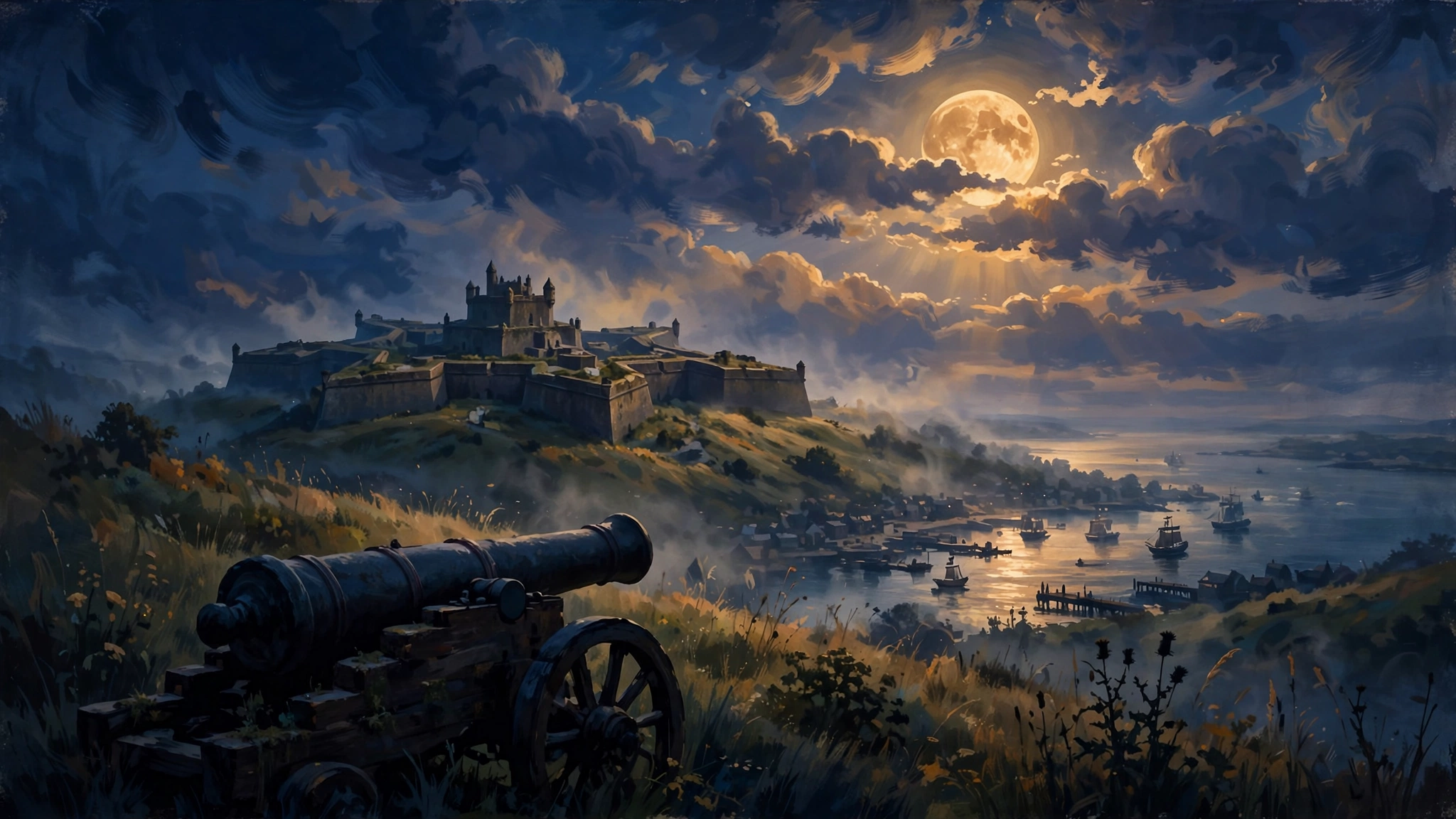
The Halifax Citadel is the fourth fortress to stand on this hill — and the one that finally stuck. Construction on the current star-shaped fortress began in August 1828 and took 28 years, finishing in 1856. Designed by Royal Engineers Colonel Gustavus Nicolls and inspired by the fortifications of France's Vauban, it was built to defend Halifax — Britain's most important naval base in North America — against attack by land and sea, mainly from the United States.
Here's the twist: despite all that firepower, the Citadel never fired a shot in anger. It never had to. The fortress was so imposing that no enemy ever tested it. British soldiers garrisoned it until 1906, when Canada took over. During the First World War it served as the command center for Halifax Harbour's defenses; in the Second World War it was a barracks and anti-aircraft coordination point.
The 78th Highlanders — a Scottish regiment from Inverness — were stationed here from 1869 to 1871, and today costumed interpreters bring their era back to life. Don't miss the Noon Gun: a cannon has been fired from the Citadel every single day since the 1850s as a time signal for the city. Time your visit so you're inside the walls at noon.
Inside you'll also find the Army Museum, with exhibits on Nova Scotia's military history, plus the barracks rooms, powder magazine, and garrison cells.
The Haunting
The Citadel is widely called the most haunted spot in Halifax, with nearly 40 documented sightings claimed by staff and visitors over the years. The most famous resident is the Grey Lady.
Legend says she is Miss Cassie Allan, a young woman engaged to a soldier stationed at the Citadel. On her wedding day — November 14, 1900, in the most-told version — she waited at the altar, but her groom never arrived. He had taken his own life that morning. Heartbroken, she never moved on. Guards and staff report a woman in a 19th-century dress drifting through the Cavalier building — along the veranda, up the staircases, sometimes pausing at the third-floor windows to stare toward the harbour — always trailing the scent of roses, always vanishing when approached.
A note for the skeptics: this is folklore, and the details genuinely vary. Other versions date the tragedy decades earlier, and some researchers argue the "Grey Lady" may be a different woman entirely — possibly connected to a soldier's abandoned first wife. The sightings, though, are reported consistently enough that the Citadel runs candlelit ghost tours through its tunnels and prison cells.
Other reported encounters: the silhouettes of spectral soldiers on the ramparts, unexplained footsteps in empty corridors, and the distant boom of phantom cannon fire. And one of the strangest tales comes from an 1867 newspaper, The Acadian Recorder, which reported a ghostly figure 12 to 16 feet tall, dressed in a British Army uniform, walking from Citadel Hill to Brunswick Street — where he paused to lean over a lamppost and light his pipe. A police officer chased him. He vanished into a window.
Walking Route / What to See
Enter through the main gate on Sackville Street (it's an uphill walk from downtown — pace yourself). Give yourself the full 75 minutes: walk the ramparts for the harbour view, tour the barracks rooms and powder magazine, and visit the Army Museum. If you arrive before noon, position yourself near the front rampart or the barracks balcony to watch the Noon Gun fired at 12:00 sharp. The Cavalier building — the Grey Lady's reported territory — is worth a slow pass on your way out. The grounds are steep and uneven in places; wear good walking shoes.
Key points of interest on your Citadel journey
- The Noon Gun at 12:00 sharp — watch from the front rampart or the barracks balcony
- The Army Museum
- The barracks rooms and powder magazine
- The Cavalier building (the Grey Lady's territory)
- The ramparts for the harbour view
- Entry through the main gate on Sackville Street